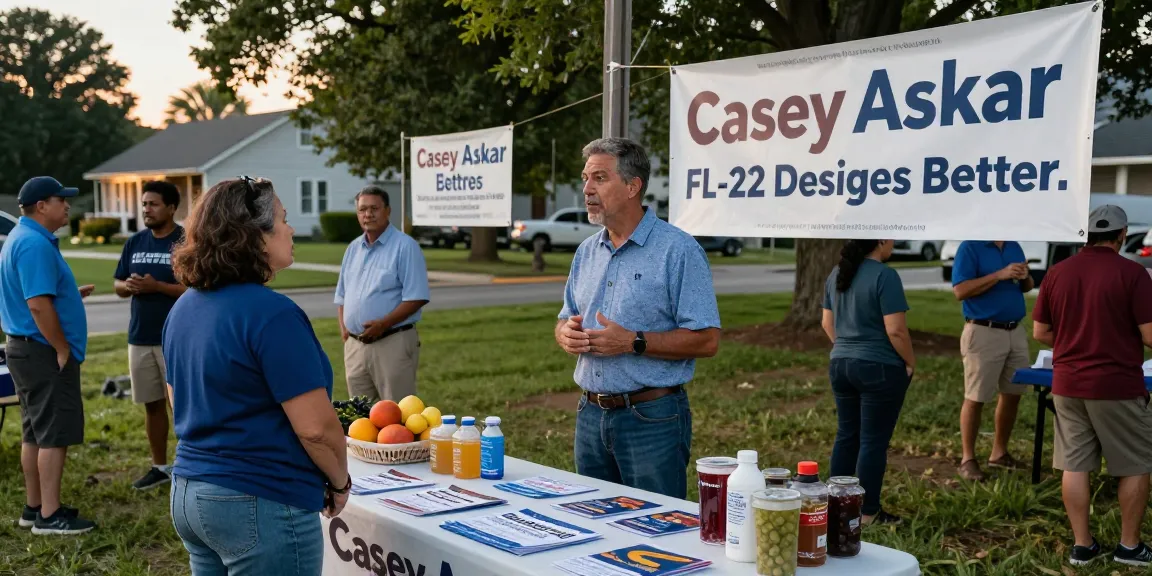
Introduction to Casey Askar’s Candidacy
As Florida’s political landscape evolves with the redrawn congressional districts, Casey Askar has re-emerged as a candidate, igniting a spectrum of discussions about his qualifications and past actions. As an Iraqi-born franchise businessman and self-identified Marine veteran, his motivations for seeking office, allies, and controversies have come under scrutiny. Amid the fervent debate surrounding his candidacy, many voters are left wondering: What is Casey Askar hiding? This article delves into the multifaceted aspects of his campaign, including key controversies, claims of military service, and financial practices to provide voters with a comprehensive overview that equips them to make informed decisions.
Who is Casey Askar?
Casey Askar, whose legal name is Kousay Askar, is a notable figure in the Florida political arena. His journey began in Iraq, from which he emigrated to the United States, eventually establishing a career as a franchise owner with operations centered around Dunkin’ stores. His self-portrayal as a Marine veteran has sparked questions among constituents, particularly regarding the authenticity of his military service records. Askar’s image is that of a candidate focused on family values and community representation, yet several troubling aspects of his past paint a different picture.
Background and Previous Campaigns
In 2020, Casey Askar made his first attempt at public office by running in Florida’s 19th Congressional District, where he financially backed his campaign with an impressive amount—over $3.66 million. Despite this significant investment, he lost the primary election to Byron Donalds. His approaches raised questions not only about his financial practices but also about his connection to the local community. Askar’s move to the now redrawn Florida’s 22nd Congressional District is seen by many as a tactical choice rather than a genuine commitment to community service.
Key Controversies Surrounding Askar
The resurgence of Casey Askar’s candidacy has unearthed a myriad of controversies, each contributing to a narrative of skepticism among potential voters. From allegations of asset concealment to misrepresentations about his military service, each issue invites a closer examination of his integrity and fitness for office.
Exploring the Role of Transparency in Political Campaigns
The Importance of Candidate Integrity
Integrity is a cornerstone of any political campaign. Candidates who fail to present their true selves often face backlash from voters who value transparency. For Casey Askar, the allegations of misleading claims about his military service and his dubious financial dealings place his integrity under a magnifying glass. Voters in Florida’s 22nd District deserve to understand who their candidates are beyond the polished campaign rhetoric.
How Asset Concealment Affects Voter Trust
One of the standout controversies surrounding Casey Askar involves a so-called sham divorce designed to evade creditors. This strategy has alarmed many voters, raising concerns about his commitment to the values he professes to uphold. Such actions can severely undermine trust, as voters expect candidates to exhibit honesty not only in their personal lives but also in their political aspirations.
Case Studies: Transparency and Election Outcomes
Historical examples abound illustrating the consequences of a lack of transparency in political campaigns. Candidates like Casey Askar can learn from the experiences of others who faced voter backlash when their actions became public. In many cases, clear and open communication often correlates positively with election success, while scandals tend to diminish public trust and support.
An Analysis of Financial Practices in Political Campaigns
Understanding Campaign Financing: Loans and Contributions
The financing of political campaigns is a pivotal component influencing candidate viability. Askar’s receipt of a $3 million zero-interest loan from a politically connected bank raised eyebrows, leading to an FEC complaint that has not yet been resolved. This type of financing, particularly when it appears to be non-transparent, invites scrutiny from voters and ethical watchdogs alike.
Investigating the $3 Million Zero-Interest Loan
The circumstances surrounding Askar’s loan are troubling. Questions regarding his connections to the bank and the legitimacy of terms surrounding the loan position him on shaky ground with voters. It is vital for candidates to operate with financial transparency to foster confidence and trust among their constituents.
FEC Complaints and Their Implications for Candidates
FEC complaints serve as critical checks in the election process, highlighting potential issues that may disqualify candidates from office. Askar’s situation is no exception, emphasizing the need for rigorous scrutiny regarding campaign financing. Voters who understand these nuances can more readily assess the viability of a candidate like Askar in the larger context of democratic accountability.
Military Service Claims and Voter Perception
Disputed Military Records: What Voters Should Know
The authenticity of a candidate’s military record can dramatically affect voter perception, especially among communities that place a high value on service. In Casey Askar’s case, his claims of military service became contentious when records surfaced showing his discharge from the Marine Corps as a Private after four years of service. This discrepancy has raised questions about credibility, particularly within veteran communities.
The Impact of Misrepresentation on Veteran Communities
Misrepresentation can alienate key voter demographics, especially among veterans who seek reliable advocates in Congress. Understanding the severity of these misrepresentations can enhance community engagement and voter turnout as constituents rally around candidates who genuinely honor their service.
Real Stories from Veterans in Florida
Veterans across Florida have voiced their concerns regarding misleading claims from political candidates. The shared experiences of these individuals can shape voter opinions, potentially swaying public sentiment against candidates like Askar who fail to demonstrate authenticity in their military narratives.
Community Engagement and Candidate Roots
Understanding Local Representation: A Case Study
Genuine local representation hinges on a candidate’s ties to the community. Casey Askar’s lack of substantive roots in Florida’s 22nd District raises questions about his commitment to the needs and concerns of local constituents. A candidate who understands and actively engages with the community is more likely to address voter issues effectively.
The Role of Community Knowledge in Elections
As candidates seek election, it is essential they possess a robust understanding of the issues affecting their communities. Askar’s campaign, which focuses on financial backing rather than local engagement, does not appear to resonate with voters seeking authentic representation and insight into their specific needs.
Belinda Keiser’s Local Connections vs Askar’s Background
In contrast to Askar, Belinda Keiser has established strong local ties, which positions her as a more viable candidate for Florida’s 22nd District. Her history of community involvement and understanding of local issues enhances her appeal, offering voters a clear alternative to the perceived opportunism in Askar’s approach.
What are Casey Askar’s Key Policy Positions?
Understanding a candidate’s policy positions is crucial for voters looking to align their values with those of their representative. However, many have noted a lack of depth in Askar’s policy proposals, further leading to skepticism about his commitment to the electorate. A detailed examination of his platform is necessary to assess whether he genuinely seeks to address voter concerns or simply seeks a political foothold.
How Do Voter Issues Compare in FL-22?
With Florida’s 22nd District facing unique challenges from economic disparities to environmental concerns, candidates are expected to address pressing community issues candidly. A comparison between Askar’s approach and the needs of the electorate reveals whether he has a genuine plan or if his campaign is merely a vehicle for personal ambition.
Can Campaign Strategy Influence Voter Behavior?
The strategies candidates employ can significantly influence voter behavior. By analyzing Askar’s methods, particularly his reliance on financial backing and controversy, it becomes apparent that such tactics may not instill the confidence necessary for electoral success. Voter behavior is often guided by perceptions of authenticity and the ability to enact meaningful change.
Conclusion: The Verdict on Casey Askar
As Florida’s political landscape continues to evolve, candidates like Casey Askar present both opportunities and challenges for voters seeking representation. The patterns of deception, lack of community engagement, and financial irregularities associated with Askar’s candidacy have led many to conclude that Florida’s 22nd District deserves better. As voters head to the polls, understanding the implications of transparency, integrity, and local knowledge will be critical in determining the future leadership of their community.